
This article is for teachers who use video clips in class and want them to make students better listeners, not just keep the lesson lively. It looks at six things to keep in mind, from the first viewing task to connected speech and new language.
Video is so much a part of everyday life that we sometimes take students’ comprehension for granted and don’t make the most of it in class. Part of the reason, I think, is that we’re not always clear about our goals. What exactly are we using the video for?
Is it mainly for listening, or for something else? There’s nothing wrong, of course, with using the beginning of a TED talk to lead into a reading activity, livening up a dull coursebook lesson with a clip from Succession, or using a short viral video as a springboard for discussion, role-play, or writing. The possibilities are endless. But using video to help students become better listeners means focusing first and foremost on listening itself. Here are six things to keep in mind.
1. Begin with a general comprehension task…
Nothing new here, of course. But remember that students have only one pair of eyes. At any given moment, they’re either watching the video or looking at the task. So keep your first task short and simple, so that students can keep their eyes on the screen for as long as possible. I’ve lost count of the video-based lessons I’ve taught or observed in which students, especially adults, spent far more time looking at the questions than at the video, which defeats the purpose of using video in the first place.
2. …but go beyond it
Back in the 1990s and early 2000s, I relied very heavily on gist tasks that promoted top-down processing. “You don’t need to understand every word” was probably as common in my classroom language as “Open your books.” Today, I try to strike a better balance between general comprehension tasks and tasks that help students “squeeze the text dry.” I also try to discourage them from over-inferring and relying too much on contextual clues (more on this in my article on strategic competence and listening).
This matters all the more because listening for gist is what most students already do when they watch videos at home. John Field (2008) argues that many listening lessons end up testing comprehension rather than teaching it. Class time is better spent on what students can’t do on their own.
3. Cut, slice, and chop
When we teach listening, there’s a trade-off between length and depth: the longer a video segment, the less we can explore it. No one in their right mind would play a 20-minute TED talk in a 90-minute lesson, of course, but you can’t always cut it down to a five-minute edit either, so we sometimes end up with segments that are longer than ideal. The good news is that students don’t have to watch every video twice from start to finish.
After you’ve played the whole segment once for general comprehension, you can select very short excerpts and play them as many times as you need:
“What point exactly is she making here?”
“Watch this bit again. Do you get the joke? No? Focus on this expression. Try again.”
“Is this an opinion or a fact? How do you know?”
4. “Grade the task, not the text”: not so simple
This is another favorite mantra from the 1990s. As a novice teacher, I used a lot of movie clips with my A1 and A2 students. After all, all I had to do was grade the task:
“Listen out for two adjectives.”
“Which color did the woman mention?”
“How many people are talking?” (!!!)
Students could answer most of my questions, of course. In hindsight, though, I can see how frustrating it must have been to get all the answers right and still, in their words, “not understand 90%” of what was said. Research on vocabulary points the same way. Anna van Zeeland and Norbert Schmitt (2013) found that listeners generally need to know around 95% of the words they hear to follow a text reasonably well.
So here’s something I’ve learned the hard way: grading the task isn’t always enough. Just because a video segment is short and fun and fits the topic on page 73 like a glove doesn’t mean you should use it. Some videos are simply too hard, and no amount of task grading will change that.
5. Focus on connected speech
When a B1/B2 student hears a sentence like I would’ve gone with you guys, but I’m kind of tired of eating Chinese food, they often miss the small, unstressed words, which tend to sound like white noise. What they actually hear may be closer to this:
I would… gone (go?) with you guys, but I’m kind… tired… eating (eat?) Chinese food.
This doesn’t always matter for comprehension. If students understand that the speaker didn’t go because they didn’t feel like eating Chinese food, fine. We don’t want them to get bogged down by every word or ending they miss.
But it isn’t that simple. Videos with too much “white noise” can get in the way of comprehension and, in the long run, undermine students’ motivation. Listening also plays a key role in long-term language learning. If students always skip over weak forms and other “unimportant” words, those words won’t get noticed and re-noticed, and that slows down interlanguage development.
So part of our job, somewhat paradoxically, is to help students listen out for the very things we sometimes ask them to ignore. In other words, we need to help them decode connected speech, a skill Richard Cauldwell argues we can and should teach:
“Listen to this sentence again. Pay attention to the pronunciation of at.”
“Listen to this sentence. How many words can you hear?”
“Did she say should cut or should’ve cut?”
Captions can help here, too. A meta-analysis by Maribel Montero Perez and her colleagues (2013) found that captioned video had a large positive effect on both listening comprehension and vocabulary learning. I’d still play a clip without captions first, though. Otherwise, students may end up reading rather than listening. Captions work best afterwards, to check what was actually said.
6. Highlight new (and useful!) language
Try a series of video activities without any focus on language, and then ask students at the end, “So, what have you learned today?” You’ll probably get a few blank stares. Students aren’t linguists, and it’s hard for them to describe what they’ve learned in terms of skills and subskills. They need something more tangible to hold on to, something they can talk about at the dinner table. Yes, I’m talking about vocabulary, grammar, and pronunciation:
“We did a listening, and she taught us lots of new expressions.”
“We watched a video and learned informal ways of reporting what people said.”
So when you plan your next video-based listening lesson, include at least one activity that highlights some aspect of vocabulary, grammar, or pronunciation that your students will both benefit from and see as useful. (For ideas on choosing which phrases to focus on, see my article on teaching vocabulary.)
If you’d like to see these ideas in practice, all my ready-to-use lessons are built around a short video.
Thanks for reading.
References
- Cauldwell, R. (2013). Phonology for listening: Teaching the stream of speech. Speech in Action.
- Cauldwell, R. (2018). A syllabus for listening: Decoding. Speech in Action.
- Field, J. (2008). Listening in the language classroom. Cambridge University Press.
- Henderson, A., & Cauldwell, R. (2020). Jungle listening: A course in decoding English for psychology students. ASp, 77, 63–77. https://doi.org/10.4000/asp.6366
- Montero Perez, M., Van Den Noortgate, W., & Desmet, P. (2013). Captioned video for L2 listening and vocabulary learning: A meta-analysis. System, 41(3), 720–739. https://doi.org/10.1016/j.system.2013.07.013
- van Zeeland, H., & Schmitt, N. (2013). Lexical coverage in L1 and L2 listening comprehension: The same or different from reading comprehension? Applied Linguistics, 34(4), 457–479. https://doi.org/10.1093/applin/ams074
More for your B2 and C1 students
Two of my books for high-intermediate and advanced learners.
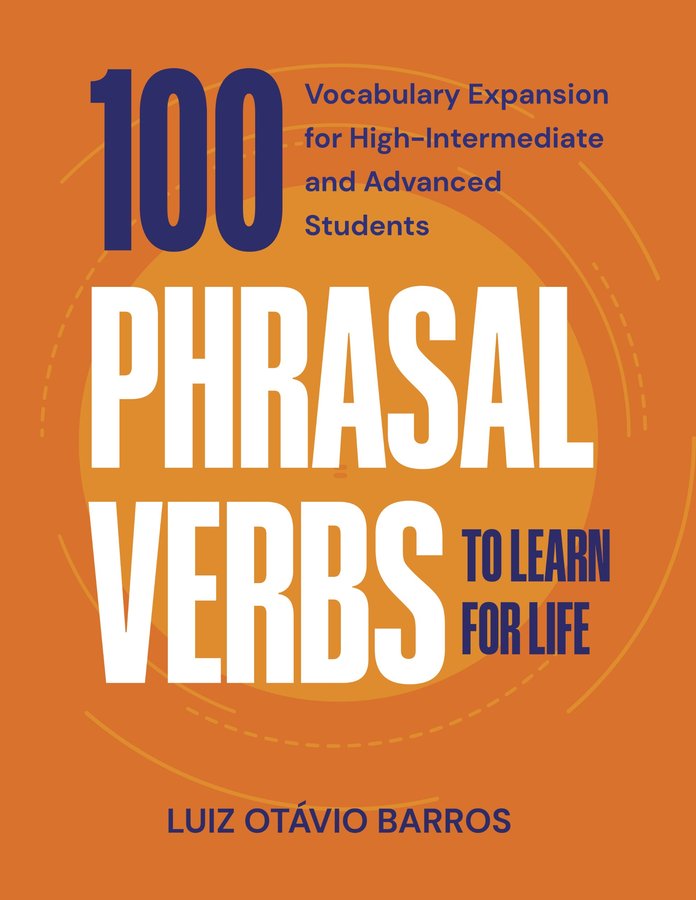
100 Phrasal Verbs to Learn for Life
100 essential phrasal verbs for B2 and C1 students, grouped by topic, with over 1,500 real-world example sentences. Look inside →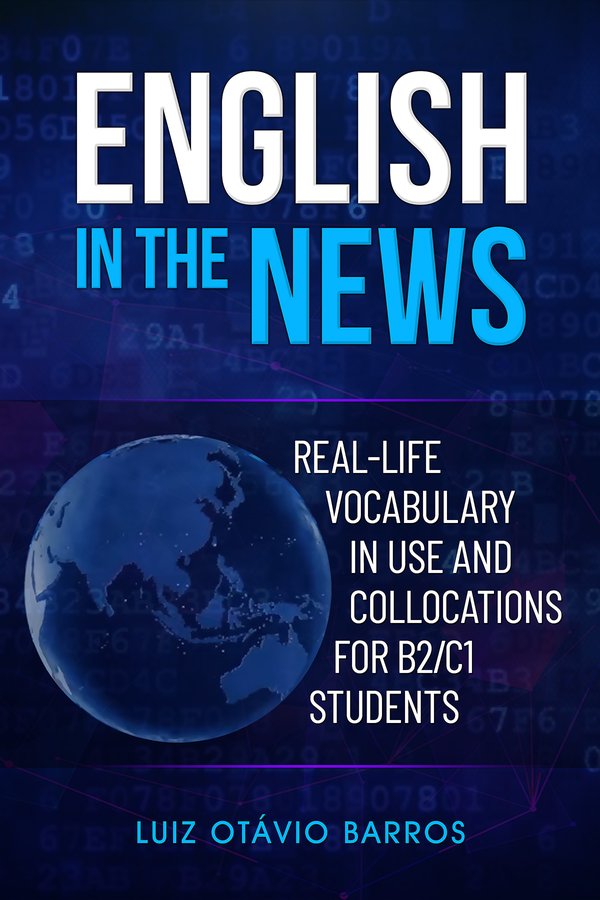
English in the News
80 words the news uses all the time, like backlash, bailout and crackdown, learned through real headlines. Look inside →Also available: all five of my books, each with a free sample.