
Academic writing · Word choice
Lie vs. Lay and Other Commonly Confused Words: Exercises
These pairs look or sound alike, but mixing them up can change what you mean. Practice them below. Every answer comes with an explanation.
- Historic or historical: Historic = important in history (a historic agreement); historical = related to the past (historical records).
- Imply or infer: In formal writing, imply = suggest indirectly (a speaker or text implies); infer = draw a conclusion from evidence (a reader infers).
- Lie or lay (present): Lie = be in a place or exist, with no object (the village lies in a valley); lay = put in place, with an object (lay the cables).
- Lie or lay (past): lie → lay → lain; lay → laid → laid. Lie meaning not tell the truth is regular: lied.
- Lose or loose: Lose (/z/) = no longer have something or be unable to find it; loose (/s/) is usually an adjective (= not tight or precise). Adverb: loosely.
- Set up or setup: Set up (two words) is a verb; setup (one word) is a noun. Same pattern: log in / login, back up / backup, break down / breakdown, drop out / dropout.
These pairs are covered in full in Lessons 2A–2F of The Academic Writing Lifesaver — Compact Edition.
Choose the correct word.
Choose the word that best completes each sentence. For imply/infer, follow the formal distinction in the blue box.
1Researchers used ? census data to trace migration patterns over two centuries.
Answer: historical. Historical = related to the past: historical data, historical records.
The other option
historicHistoric means important in history. These are simply records from the past.
2When the university admitted its first female students in 1970, the local paper called it a ? day.
Answer: historic. The day made history, so it’s historic.
The other option
historicalHistorical just means related to the past. Any day in 1970 is historical; this one was important.
3The wording of the conclusion ? that the reforms came too late, although it never says this directly.
Answer: implies. The wording suggests the idea indirectly, so use implies.
The other option
infersInfer means draw a conclusion from evidence; that is not the action described here.
4Readers can ? from the footnotes that the author had access to private letters.
Answer: infer. Infer = reach a conclusion from clues or evidence: infer (something) from ….
The other option
implyReaders don’t suggest anything here. They draw a conclusion.
5The appeal of the method ? in its simplicity.
Answer: lies. Lie in = be found in, exist in. No object follows: lies where? In its simplicity.
The other option
laysLay needs an object (lay what?), and there isn’t one here.
6Early research in this area ? the foundations for modern genetics.
Answer: laid. Past of lay (= establish), with an object: laid the foundations.
The other options
layLay is the past of lie (be in a place), which takes no object.
lainLain is the past participle of lie, used after has/had.
7For years, the manuscript ? forgotten in a university basement.
Answer: lay. Past of lie (= be in a place): the manuscript lay in the basement.
The other options
laidLaid needs an object: someone laid the manuscript somewhere.
liedLied is the past of lie meaning not tell the truth.
8By the time repairs began, the factory had ? idle for almost a decade.
Answer: lain. Had lain idle means had remained unused; lain is the past participle of lie.
The other options
laidLay needs an object in this meaning; the factory did not put anything in place.
layAfter had, use the past participle, not the simple past.
9Without regular practice, students can quickly ? the skills they have acquired.
Answer: lose. Lose means stop having something: lose the skills you have acquired. It has one o.
The other option
looseLoose is an adjective meaning not tight.
10The IT team will ? new accounts for all incoming students.
Answer: set up. After will, you need the verb, written as two words.
The other option
setupSetup (one word) is a noun: the account setup.
Wrong word or correct?
Decide whether each sentence uses the right word. For imply/infer, follow the formal distinction in the blue box. Six are wrong and four are correct.
1Please remember to backup your files before installing the update.
After remember to, you need the verb, written as two words: to back up your files. Backup is the noun: make a backup.
2Several witnesses later admitted that they had lied to investigators.
When lie means not tell the truth, it’s regular: lie → lied → lied.
3The library classifies novels set in the past as historic fiction.
Historical = related to the past, so novels set in the past are historical fiction.
4The term is used loosely to describe any form of online learning.
Loosely (= not precisely) is the adverb of loose, spelled with oo.
5The minister’s silence inferred that the deal was off.
In formal academic writing, use implied for suggested: The minister’s silence implied that the deal was off. Use inferred when someone draws a conclusion from evidence.
6The main weakness of the study lays in its small sample.
Lie in = be found in, with no object: The main weakness lies in its small sample.
7The report examines why the dropout rate is higher among part-time students.
Dropout (one word) is a noun, here describing rate. The verb is drop out.
8Users must enter a password every time they login to the portal.
This is the verb, so it’s two words: they log in. Login is the noun: your login details.
9The new white paper lays out the government’s plans for tax reform.
Lay out takes an object. Ask lays out what? The government’s plans.
10Several committee members feared they would loose their seats in the next election.
You need the verb: would lose. Remember: lose and lost both have four letters.
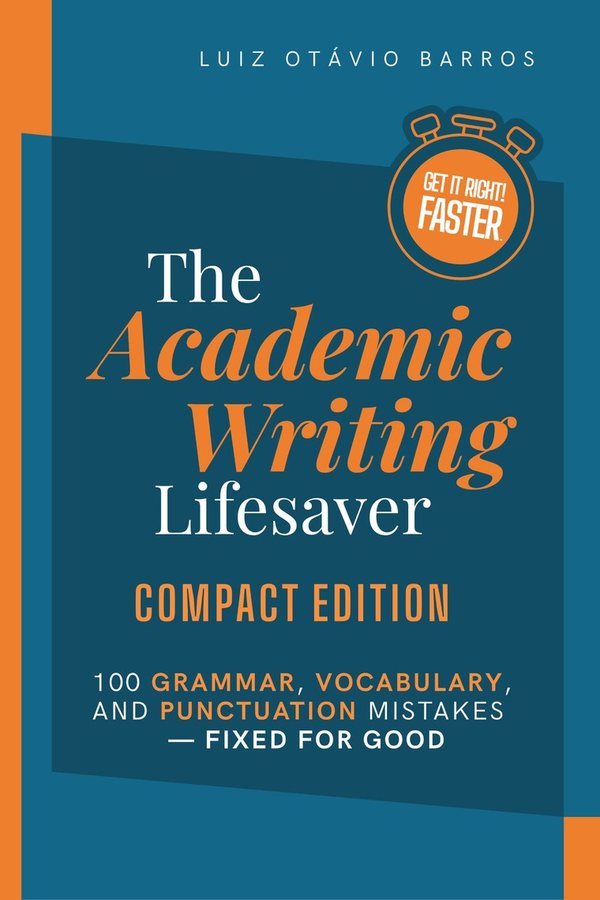
Go deeper: Lessons 2A–2F
These pairs are covered in full in Lessons 2A–2F of The Academic Writing Lifesaver — Compact Edition, with more examples, learning hacks, and self-check exercises.