
Academic writing · Grammar
Less vs. Fewer and Other Singular or Plural Mistakes: Exercises
Less or fewer? Amount or number? Data is or data are? Choosing between singular and plural trips up many academic writers. Practice the forms that matter most below. Every answer comes with an explanation.
- Amount or number: In formal writing, amount of + uncountable nouns (the amount of rainfall); number of + plural nouns (the number of storms).
- Analysis or analyses: Words in -sis are singular; their plurals end in -ses: analysis/analyses, hypothesis/hypotheses, crisis/crises.
- Criterion or criteria: Criterion and phenomenon are singular; criteria and phenomena are plural. Also bacterium/bacteria, medium/media, curriculum/curricula.
- Data: Data can take singular or plural agreement. Many academic and scientific styles prefer plural; check the relevant style guide. Use this data is or these data are consistently.
- Evidence: In the meanings practiced here, evidence, research, information, advice, feedback, software, equipment, and knowledge are uncountable: no -s, no a/an, singular verb. For one unit: a piece of evidence.
- Less or fewer: In formal writing, less + uncountable nouns; fewer + plural nouns. But less than with time, money, distance, and weight: less than ten dollars.
- News: News takes a singular verb. So do fields of study ending in -ics (Economics is …). When statistics means numbers, it is plural.
These points are covered in full in Lessons 3A–3G of The Academic Writing Lifesaver — Compact Edition.
Choose the correct form.
Choose the word or form that best completes each sentence. For amount/number and less/fewer, follow the formal distinction in the blue box.
1Researchers have collected a vast ? of information on consumer habits.
Answer: amount. Information is uncountable (how much?), so use amount of.
The other option
numberNumber of goes with plural nouns you can count: a number of surveys.
2An increasing ? of universities now offer degrees entirely online.
Answer: number. Number of + a plural noun (how many?): a number of universities.
The other option
amountIn formal academic writing, use number with countable nouns such as universities.
3Each ? was tested against data from three independent studies.
Answer: hypothesis. -sis = singular (hypothesis); -ses = plural (hypotheses).
The other option
hypothesesEach needs a singular noun, and the verb was is singular too.
4These ? were applied to every application the committee received.
Answer: criteria. These and were both signal a plural noun: criteria.
The other option
criterionCriterion is singular: this criterion was.
5The northern lights are a natural ? caused by charged particles from the sun.
Answer: phenomenon. -on = singular (phenomenon); -a = plural (phenomena).
The other option
phenomenaAfter a, you need the singular form.
6These data ? drawn from hospital records in four countries.
Answer: were. These marks data as plural, so use these data were drawn.
The other option
wasThese data is plural, so the verb must be plural. This data was … is common in business writing.
7Investigators found little ? of tampering at any of the polling stations.
Answer: evidence. Evidence is uncountable here, so little evidence is correct.
The other option
evidencesUse evidence after little. To count separate items, say pieces of evidence.
8After the bypass opened, ? trucks passed through the town center.
Answer: fewer. Trucks is a plural noun (how many?), so use fewer.
The other option
lessWith a plural noun such as trucks, fewer is the conventional choice in formal writing.
9The clinic is ? than two miles from the nearest bus stop.
Answer: less. With time, money, distance, and weight, less than is the usual choice, even before a plural noun.
The other option
fewerFewer than two miles sounds unnatural. Two miles is treated as one distance.
10So far, the news from the flood zone ? been encouraging.
Answer: has. News ends in -s, but it’s uncountable and takes a singular verb.
The other option
haveRemember: No news is good news.
Mistake or correct?
Decide whether each sentence is correct. For amount/number and less/fewer, follow the formal distinction in the blue box. Six have a mistake and four are correct.
1The committee gave us some useful advices on how to structure the proposal.
Advice is uncountable, so it has no plural: some useful advice. For one unit: a piece of advice.
2The statistics in the appendix come from the national census.
Here, statistics means numerical information, so it takes a plural verb: the statistics come from. As the name of a field of study, statistics takes a singular verb.
3Two separate analysis of the soil samples are planned for next spring.
Two needs a plural noun: two separate analyses. Remember: -sis = one, -ses = more than one.
4The editor found a surprising amount of spelling errors in the final chapter.
You can count errors (how many?), so formal writing uses a surprising number of spelling errors.
5Little research has examined how noise affects learning in open-plan classrooms.
Research is uncountable, so it takes little (not few) and a singular verb (has).
6The bacteria was found in samples from all three rivers.
Bacteria is plural: The bacteria were found … For one, use the singular: The bacterium was found …
7The software has been updated to fix several security flaws.
Software is uncountable: it takes a singular verb (has) and has no plural form.
8This criteria is often used to measure academic success.
Criteria is plural. Use This criterion is … for one, or These criteria are … for more than one.
9There were less complaints this year than last.
Complaints is a plural noun (how many?), so formal writing uses fewer complaints.
10From a company newsletter: The booking data for July was more reliable than the figures for June.
Here, data is treated as a body of information, so singular was is acceptable. In academic writing, check the relevant style guide: many prefer plural agreement.
Go deeper: Lessons 3A–3G
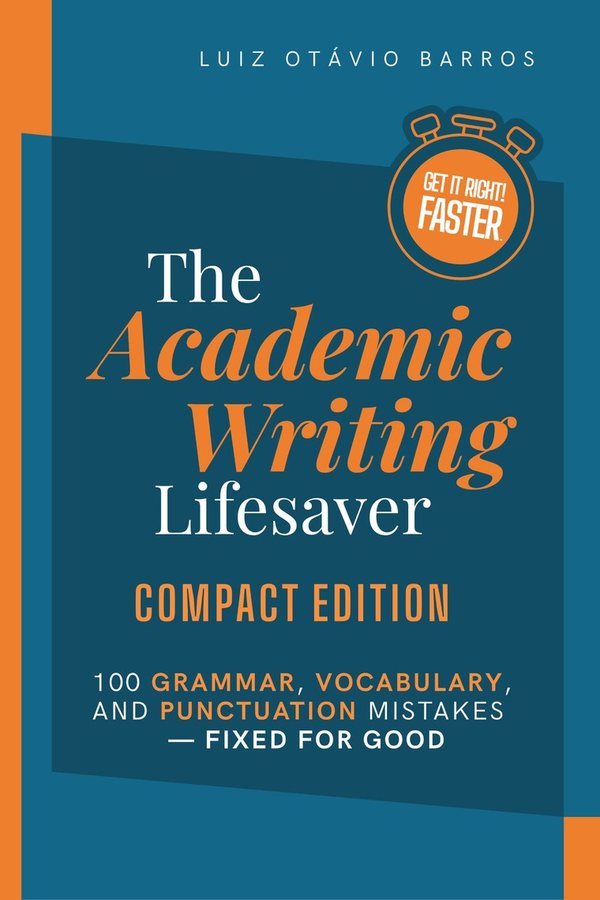
These points are covered in full in Lessons 3A–3G of The Academic Writing Lifesaver — Compact Edition, with more examples, learning hacks, and self-check exercises.