
Academic writing · Grammar
Formal vs. Informal English: Academic Writing Exercises
Some forms that sound fine in conversation look out of place in an essay or a research paper. Practice the formal choices that academic readers expect. Every answer comes with an explanation.
- If it was or if it were: For hypothetical situations, were is the preferred formal form with every subject: If the test were easier, … For real possibilities in the past, use normal agreement: I/he/she/it was; you/we/they were.
- It’s important that …: In formal American English, use the base form of the verb after expressions of necessity or recommendation (important, essential, recommend, require): It is important that each form be signed. For negatives, add not: … that it not be delayed.
- Literally: Use literally when the statement is true in its exact, nonfigurative sense. Avoid using it merely to exaggerate in academic writing.
- End-of-sentence prepositions (1): A preposition at the end of a sentence is natural, but don’t drop it: the study I relied on. For a more formal style, replace a multi-word verb with one word: look into → investigate.
- End-of-sentence prepositions (2): For a more formal style, move the preposition before which (things) or whom (people): the town in which she grew up.
- Quick or quickly: Adjectives describe nouns (a quick reply). Adverbs describe how something is done (replied quickly).
These points are covered in full in Lessons 13A–13F of The Academic Writing Lifesaver — Compact Edition.
Choose the best option for academic writing.
Choose the form that best suits formal academic writing.
1If the drug ? cheaper, more hospitals would stock it.
Answer: were. The sentence imagines a lower price. Were is the preferred formal choice with the singular subject the drug: If the drug were cheaper, …
The other option
wasIf it was is common in everyday English. For an imagined situation in academic writing, use were, even with a singular subject.
2If the fire alarm ? tested last week, there should be a record of it.
Answer: was. This is a real possibility in the past, so use normal agreement: the fire alarm was tested.
The other options
wereThis isn’t an imagined situation. Maybe the alarm was tested, and maybe it wasn’t. For a real possibility in the past, use normal agreement: the fire alarm was.
would beWould doesn’t go in the if part here, and last week needs a past form: If the fire alarm was tested last week, …
3It is essential that every sample ? stored at a constant temperature.
Answer: be. For a requirement in formal American English, use the base form of the verb after it is essential that, even with a singular subject.
The other options
will beThis sentence expresses a requirement. Use the recommended subjunctive form be: every sample be stored.
isIs is common in everyday English, and British English often uses should be. In formal American English, use the base form: be.
4The board recommended that the vote ? held until all members were present.
Answer: not be. This is the negative form of the pattern: not + the base form.
The other option
won’t beAfter recommend that, use the base form of the verb. For a negative, put not before it: that the vote not be held.
5Shares in the company ? after the announcement.
Answer: fell sharply. This says plainly what happened, which suits academic writing.
The other option
literally fell off a cliffNothing actually fell off a cliff, so literally is an exaggeration here. That’s common in everyday English, but avoid it in academic writing.
6These are the side effects that patients find hardest to ?.
Answer: tolerate. A single formal verb replaces the multi-word verb put up with.
The other options
put upThe preposition is missing: put up with. The single word tolerate is more formal.
put up toThe multi-word verb is put up with, not put up to. In academic writing, tolerate is the more formal choice.
7This is a question that future studies will need to ?.
Answer: address. Address is a formal, one-word equivalent of deal with.
The other options
dealThe preposition is missing: deal with. The single verb address is more formal.
deal aboutThe multi-word verb is deal with, not deal about. Address is more formal.
8The decade ? the novel is set was a time of rapid social change.
Answer: in which. Preposition + which is the formal pattern: the decade in which the novel is set.
The other options
whichThe preposition is missing. Say it the everyday way first: the decade the novel is set in. Then move in before which.
in whomWhom refers to people. For things, places, and times, use which.
9The two authors ? the idea was borrowed are not mentioned in the article.
Answer: from whom. The idea was borrowed from the authors, and they’re people, so use from whom.
The other options
from whichWhich is for things and places. Authors are people, so use whom.
whomThe preposition is missing. The idea was borrowed from the authors: from whom.
10The second group completed the task ? than the first.
Answer: more quickly. This describes how the group completed the task, so you need the adverb.
The other option
more quickQuick is an adjective, so it can’t describe the verb completed. Test: you’d say completed it well, not good, so use the adverb: more quickly.
Revise or keep?
Decide whether each sentence suits formal academic writing. Six need revising and four are fine as they are.
1The new policy literally opened the floodgates to fraud.
Nothing was physically opened. Opened the floodgates is a metaphor, so literally is an exaggeration. Say it plainly: The new policy led to a sharp rise in fraud.
2Even if the theory was correct, it would not explain the earlier results.
For this hypothetical meaning, were is the preferred formal choice: Even if the theory were correct, it would not explain the earlier results. Was is also used, especially in less formal English.
3Most of the seedlings grew better in partial shade.
Better describes how the seedlings grew. It’s the comparative form of the adverb well.
4The permit which the excavation was authorized expires in June.
The excavation was authorized under the permit, so under is missing: The permit under which the excavation was authorized expires in June.
5If the letter was sent in March, it should have arrived by now.
Maybe the letter was sent in March; the writer is considering a real possibility in the past. Use was with the singular subject the letter.
6It is vital that every wound be cleaned before it is dressed.
For a requirement in formal American English, use the base form of the verb after it is vital that: be cleaned.
7This is the committee I submitted my proposal.
You submit a proposal to a committee, so keep to: This is the committee I submitted my proposal to. A more formal version is the committee to which I submitted my proposal.
8During the storm, the old pier was literally washed away.
The water really did carry the pier away, so literally is used in its exact sense. Without it, washed away could be read figuratively.
9The database performs an automatically check every night.
Check is a noun here, so use the adjective automatic: The database performs an automatic check every night.
10The guidelines require that each assistant checks the data twice.
For a requirement in formal American English, use the base form: The guidelines require that each assistant check the data twice. Other varieties also use checks or should check.
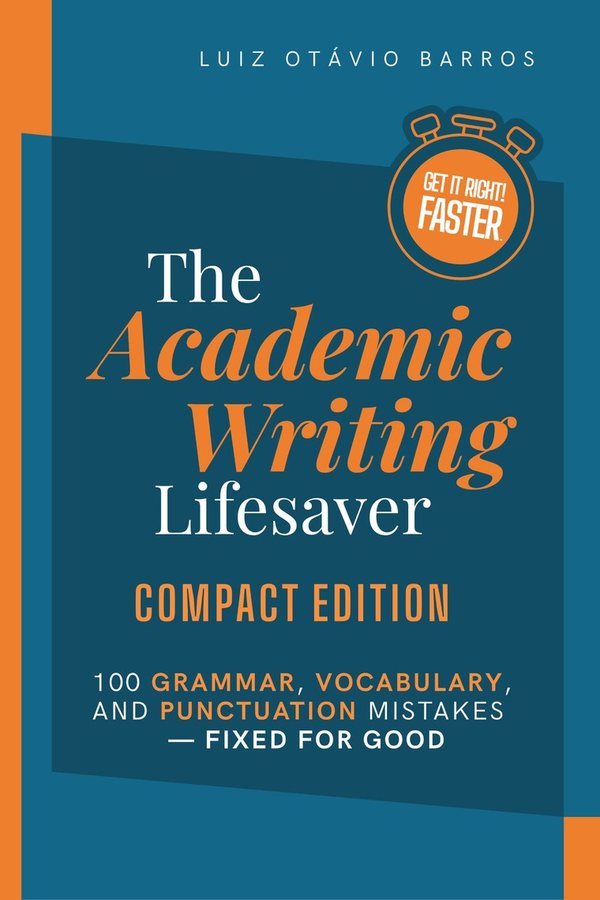
Go deeper: Lessons 13A–13F
The differences between everyday and academic English are covered in full in Lessons 13A–13F of The Academic Writing Lifesaver — Compact Edition, with more examples, learning hacks, and self-check exercises.