
Academic writing · Grammar
Could Have vs. Could Of and Other Common Grammar Mistakes: Exercises
Some grammar mistakes are more common among native speakers than among learners, because they sound right. Practice spotting could of, alot, irregardless, and other errors that can hurt your credibility. Every answer comes with an explanation.
- One word or two? A lot is always two words. Altogether = completely; all together = as a group. Sometime = at some point; some time = a while. Anyway = in any case; any way = any manner. Maybe = perhaps; may be = might be.
- Apart vs. a part: Apart (from) = separated, or except for. A part (of) = one part; play a part in = have a role in.
- There is vs. there are: Singular or uncountable noun → there is; plural noun → there are. Ask: how much or how many?
- Could have, not could of: Could of, should of, would of, might of, and must of are always wrong.
- I’ve seen, not I seen: Seen, done, gone, taken, and begun need an auxiliary such as have or had. Otherwise, use saw, did, went, took, began.
- Regardless, not irregardless: More formal options are irrespective of and notwithstanding.
- Seldom, not seldomly: Rarely is more common. At the start of a sentence, invert: Rarely have we seen …
These points are covered in full in Lessons 16A–16G of The Academic Writing Lifesaver — Compact Edition.
Choose the correct word or form.
Choose the option that completes each sentence correctly.
1The difference between the two groups ? due to measurement error.
Answer: may be. May be = might be. It’s the verb of the sentence.
The other option
maybeMaybe means perhaps. Try the test: The difference perhaps due to … has no verb, so you need may be.
2Sleep quality ? in how well students retain new vocabulary.
Answer: plays a part. Play a part in means have a role in. Try the test: plays one part in makes sense, so write a part.
The other option
plays apartApart is about separation. Here you mean a role: plays a part.
3Over the past decade, there ? several attempts to reform the pension system.
Answer: have been. Attempts is plural (how many?), so use there have been.
The other option
has beenUse there has been only with singular or uncountable nouns (how much?).
4With a longer recruitment period, the team ? a larger sample.
Answer: could have used. Could have + past participle describes a past possibility that didn’t happen.
The other options
could of usedCould’ve sounds like could of, but could of is never correct. Write could have.
could usedTo talk about the past, a modal needs have + past participle: could have used.
5The auditors ? the same accounting error at three other branches before they raised the alarm.
Answer: had seen. One past event came before another, so use the past perfect: had seen.
The other options
seenSeen can’t stand alone. It needs have or had.
have sawAfter have, use the past participle seen, not saw. And since this happened before they raised the alarm, you need had.
6The exam must be taken in person ? the student’s location.
Answer: regardless of. Regardless of + noun phrase means without being affected by. In the middle of a sentence, it needs no comma.
The other options
irregardless ofIrregardless is nonstandard. Use regardless of.
regardlessBefore a noun phrase, regardless needs of: regardless of the student’s location.
7This type of error is ? detected by automated checks.
Answer: seldom. Seldom (= rarely) goes after the auxiliary is and before the main verb. Rarely would also work.
The other option
seldomlySeldom is already an adverb, so it doesn’t take -ly. Seldomly is considered archaic or nonstandard in contemporary English.
8The three research teams met ? for the first time in March.
Answer: all together. All together = as a group. Try the test: met together makes sense, so write all together.
The other option
altogetherAltogether means completely, which doesn’t fit here.
9Rarely ? such a rapid decline in a bird population.
Answer: have biologists recorded. Inverted word order after rarely: Rarely have biologists recorded …
The other option
biologists have recordedWhen a sentence starts with rarely, the auxiliary comes before the subject.
10? the opening chapter, the book is aimed at specialists.
Answer: Apart from. Apart from = except for. It’s always one word in this phrase.
The other option
A part fromA part means one part. Here you mean except for, which is apart from.
Mistake or correct?
Decide whether each sentence is correct. Six have a mistake and four are correct.
1There remain serious doubts about the reliability of the witness statements.
There + remain works like there are. The verb agrees with the noun after it, and doubts is plural.
2The error should of been noticed before the results were published.
Should of is never correct. Write The error should have been noticed …
3We done most of the fieldwork in the first month.
Done needs have or had. Use the simple past: We did most of the fieldwork … Or the past perfect: We had done …
4The paper was accepted, the reviewers’ reservations notwithstanding.
Notwithstanding (= regardless of) can come after a noun phrase, as it does here. It’s formal and suits academic writing.
5We spent alot of time cleaning the data.
Alot isn’t a word. Always write a lot as two words: We spent a lot of time …
6There’s several ways to interpret these results.
Ways is plural (how many?), so use there are: There are several ways … There’s with a plural noun is common in speech, but avoid it in writing.
7I had begun the analysis before the new data arrived.
Begun is right after had. Without an auxiliary, you’d need the simple past: I began the analysis …
8The policy applies to all employees irregardless of their contract type.
Irregardless is nonstandard. Write … all employees regardless of their contract type.
9The medieval scribe might have copied the date incorrectly.
Might have + past participle describes a past possibility. Might of is never correct.
10The coalition government fell a part less than a year after the election.
Fall apart means break up or collapse. Try the test: fell one part makes no sense, so write The coalition government fell apart …
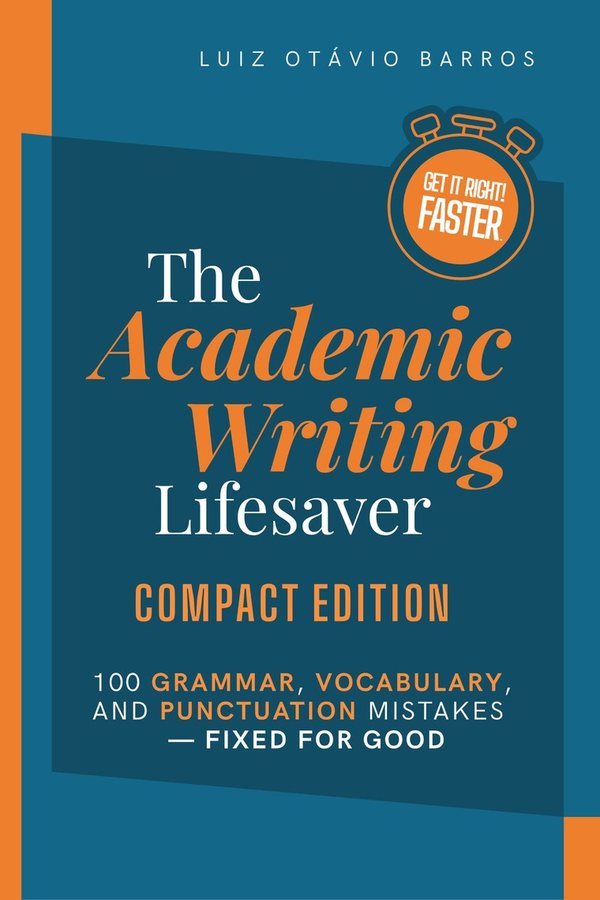
Go deeper: Lessons 16A–16G
These mistakes are covered in full in Lessons 16A–16G of The Academic Writing Lifesaver — Compact Edition, with more examples, learning hacks, and self-check exercises.