
Academic writing · Punctuation
Comma Exercises for Academic Writing
Commas trip up even experienced writers, native speakers included. Practice the comma rules that matter most in academic writing, from interrupters to comma splices. Every answer comes with an explanation.
- Interrupters: Commas set off extra information: one comma at the start or end of a sentence, a pair in the middle. Dashes add emphasis, but don’t mix a dash and a comma.
- What interrupters do: They add context, show your attitude, or identify a noun: Lagos, Nigeria’s largest city, … Commas usually set off extra information, but short, closely integrated expressions may need none.
- No comma after the subject: The results of the trial were clear. Only a pair of commas can come between a subject and its verb.
- Comma before and: Usually use a comma before and between complete clauses; usually omit it when two verbs share a subject. Short, closely connected clauses may need no comma. In a list, the comma before and (the Oxford comma) is common but optional.
- Comma splices: A comma alone can’t join two complete sentences. Use a semicolon or a period.
- Conjunctions: Or use a comma + and, but, yet, so, or. In mid-sentence, because usually needs no comma.
- Linking words: Semicolon or period + however, therefore, furthermore … + comma.
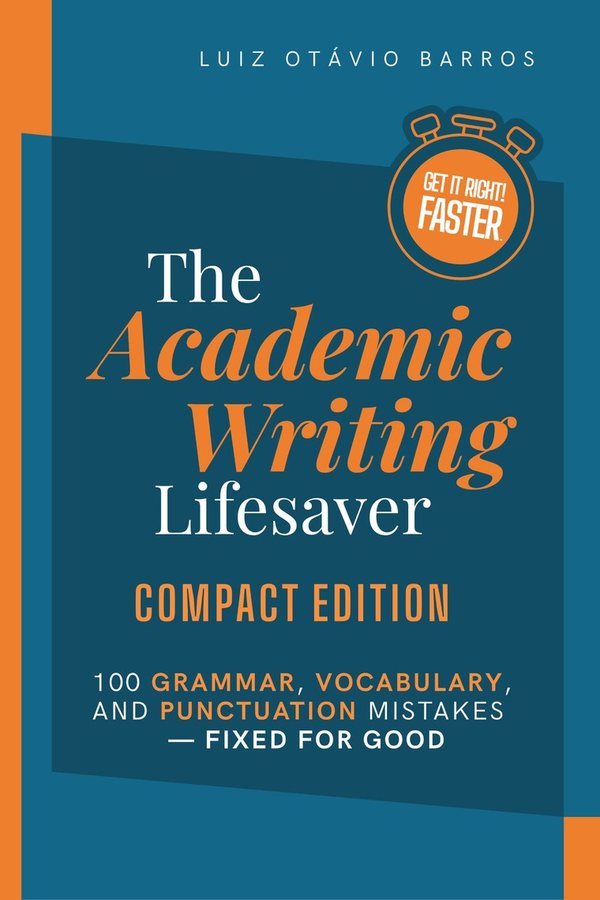
These points are covered in full in Lessons 5A–5G of The Academic Writing Lifesaver — Compact Edition.
Choose the correct option.
Choose the option that is punctuated correctly and makes sense.
1The city’s old observatory? is now a public museum.
Answer: …observatory, built in 1890, is… Built in 1890 is extra information in the middle of the sentence, so it needs a comma on both sides.
The other options
…observatory, built in 1890 is…The closing comma is missing. Commas around extra information in the middle of a sentence come in pairs.
…observatory built in 1890, is…The opening comma is missing, which leaves a single comma between the subject and its verb.
2Rural clinics?face the most severe staff shortages.
Answer: …clinics—especially remote ones—face… A pair of dashes sets off the interrupter and gives it extra emphasis.
The other options
…clinics—especially remote ones, face…This mixes a dash and a comma. If you open with a dash, close with one.
…clinics, especially remote ones—face…This mixes a comma and a dash. Use two commas or two dashes.
3The smallest schools? achieved the highest test scores.
Answer: …schools, surprisingly, achieved… Here, surprisingly is set off as an interrupter, so the commas come in pairs. Omitting both commas would also be possible.
The other options
…schools surprisingly, achieved…The opening comma is missing. Use a comma on both sides of surprisingly, or on neither.
…schools, surprisingly achieved…The closing comma is missing, so the reader can’t tell where the interrupter ends.
4Researchers who study sleep patterns? often recommend a fixed bedtime.
Answer: …patterns often… However long the subject, no comma goes between it and the verb: Researchers … recommend.
The other option
…patterns, often…The subject is Researchers who study sleep patterns. A single comma shouldn’t separate it from the verb.
5The city council funded the new clinic? a local charity agreed to staff it.
Answer: …clinic, and a… A comma before and clearly separates the two complete clauses.
The other options
…clinic, a…Both halves are complete sentences, so a comma alone creates a comma splice.
…clinic a…These are two complete clauses. With no punctuation or joining word between them, they run together.
6The board discussed the budget? approved two new research positions.
Answer: …budget and approved… Both verbs share the board as their subject, so no comma is needed.
The other option
…budget; and approved…The words after the semicolon don’t form a complete clause: they have no stated subject.
7The original survey had 60 questions? the revised version has only 25.
Answer: …questions; the… A semicolon joins two complete sentences that are closely linked. A period would also work.
The other option
…questions, the…Both halves can stand alone as sentences, so a comma alone creates a comma splice.
8The new therapy works well? few clinics offer it.
Answer: …well, yet few… Yet introduces a surprising contrast, and it takes a comma, like but.
The other options
…well, so few…So signals a result, but a therapy that works well is no reason for clinics not to offer it.
…well; however few…The semicolon is right, but however needs a comma after it: ; however, few …
9Digital recordings preserve the speaker’s words? they capture changes in tone.
Answer: …words; furthermore, they… Semicolon + furthermore + comma introduces an additional point. Moreover would also work.
The other options
…words, furthermore, they…A comma before furthermore leaves a comma splice.
…words; however, they…The punctuation works, but the second point adds information; it doesn’t contrast with the first.
10Fuel prices rose sharply in the spring? airlines canceled several routes.
Answer: …spring. As a result, airlines… Period + As a result + comma links the cause to its effect.
The other options
…spring, as a result, airlines…As a result can’t join two sentences after a comma. Use a semicolon or a period before it.
…spring. In contrast, airlines…The punctuation is right, but nothing contrasts here: the canceled routes are a result of the higher prices.
Mistake or correct?
Decide whether each sentence is punctuated correctly. Six have a mistake and four are correct.
1The participants who completed all four sessions, received a certificate.
The subject is The participants who completed all four sessions. Don’t separate it from its verb with a comma: … all four sessions received a certificate.
2The pilot study, a six-week trial with 40 volunteers produced no usable data.
A six-week trial with 40 volunteers describes the pilot study, and it needs a comma on both sides: The pilot study, a six-week trial with 40 volunteers, produced …
3The effect was indeed stronger among younger participants.
Indeed is a short word closely tied to the sentence, so commas around it are optional. The effect was, indeed, stronger … would also be correct.
4The lecture was moved online, the main hall was being repaired.
A comma alone can’t join these clauses. To show the reason, write: The lecture was moved online because the main hall was being repaired.
5The exhibition features maps, photographs, and handwritten diaries.
The comma before and is the Oxford comma. Some styles omit it when the meaning is clear: maps, photographs and handwritten diaries.
6The university opened two new laboratories, the city extended a light-rail line to the campus.
Both halves are complete sentences, so a comma alone can’t join them. Add and: … two new laboratories, and the city extended … A semicolon would also work.
7Solar panels are getting cheaper every year, however, storing the electricity remains expensive.
However can’t join two sentences after a comma. Use a semicolon or a period: … every year; however, storing … or … every year. However, storing …
8Students can submit a written report, or they can give a ten-minute presentation.
A comma + or can join two complete sentences, just as a comma + and or but can.
9The budget, unlike last year’s, does not include travel costs.
Unlike last year’s is extra information between the subject and the verb, so it starts and ends with a comma.
10The northern route—nearly 40 miles longer, takes less time in winter.
The interrupter opens with a dash, so it must close with one: The northern route—nearly 40 miles longer—takes less time in winter. Two commas would also work.
Go deeper: Lessons 5A–5G
Comma use is covered in full in Lessons 5A–5G of The Academic Writing Lifesaver — Compact Edition, with more examples, learning hacks, and self-check exercises.