
Academic writing · Grammar
Because vs. Because Of and Other Cause and Effect Words: Exercises
Explaining why things happen is central to academic writing, but cause-and-effect words follow strict rules of grammar and punctuation. Practice the cases that trip up even confident writers. Every answer comes with an explanation.
- Because or because of: because + a clause; because of + a noun: because prices rose / because of higher prices. Owing to, on account of, as a result of, and due to work like because of.
- Given: + a noun (given the cost); given (the fact) that + a clause. More formal: in light of, in view of.
- Therefore: means so, with different punctuation: … cost; therefore, … / … cost. Therefore, … In the middle of a clause, commas are optional.
- Comma before so: Add a comma when so means as a result. Leave it out when so expresses purpose (= so that).
- The reason: The reason … is that … (is because is common in everyday English). Also a reason for + noun and a reason to + verb.
- Cause and effect verbs: With the cause as the subject, use lead to, give rise to, contribute to, or bring about. With the effect as the subject, use result from, arise from, stem from, or be attributable to.
These points are covered in full in Lessons 10A–10F of The Academic Writing Lifesaver — Compact Edition.
Choose the correct option.
Choose the word, phrase, or punctuation that fits the sentence.
1Several flights were canceled ? the fog.
Answer: because of. Because of + a noun: because of the fog.
The other options
becauseBecause needs a clause with a verb: because there was fog.
dueDue needs to: due to the fog.
2The data had to be collected again ? the original files were corrupted.
Answer: because. What follows is a clause with a verb (the files were corrupted), so use because.
The other options
because ofBecause of goes before a noun: because of corrupted files.
owing toOwing to works like because of, so it needs a noun: owing to file corruption.
3The village school closed last year ? students.
Answer: for lack of. For lack of + a noun means because there wasn’t enough of something.
The other options
becauseBecause needs a clause with a verb: because there were too few students.
as a consequenceBefore a noun, this phrase needs of, and the meaning would still be wrong: the problem was too few students.
4? the limited time available, we focused on only three case studies.
Answer: Given. Given + a noun phrase = considering the limited time available.
The other options
Given thatGiven that needs a clause: Given that time was limited, …
BecauseBecause needs a clause. Use because of before a noun phrase.
5? the stadium holds only 5,000 people, tickets are likely to sell out quickly.
Answer: Given that. Given (the fact) that + a clause.
The other options
Because ofBecause of goes before a noun phrase, not a clause: because of the stadium’s size.
In view ofIn view of is a formal alternative to given. It also goes before a noun phrase: in view of the stadium’s size.
6The original manuscript has been lost? scholars must rely on later copies.
Answer: . Therefore,. Period + Therefore + comma. A semicolon also works: … lost; therefore, scholars …
The other options
, therefore,A comma can’t join two sentences, even with therefore. This is a comma splice.
, thereforeThis is a comma splice. Therefore isn’t punctuated like so.
7The bridge was closed for inspection? traffic was diverted through the town center.
Answer: …inspection, so traffic… So means as a result here, so add a comma before it. Test: … inspection; as a result, traffic …
The other options
…inspection in order that traffic…In order that introduces a purpose. The diversion wasn’t the purpose of closing the bridge. It was the result.
…inspection, therefore traffic…Therefore can’t join two sentences after a comma: … inspection; therefore, traffic …
8The reason the trial was stopped early ? several patients had serious side effects.
Answer: is that. The reason … is that … is the standard pattern in academic writing.
The other options
is due toDue to goes before a noun, not a clause.
is forAfter the reason, use is that + a clause. For goes before a noun: the reason for the decision.
9There are several reasons ? this change in policy.
Answer: for. Reason(s) for + a noun phrase: reasons for this change.
The other options
toReason to is followed by a verb: a reason to change the policy.
ofReason isn’t followed by of here. Use reasons for.
10Rising sea levels have ? the loss of several small islands.
Answer: led to. Cause + lead to + effect: Rising sea levels have led to the loss …
The other options
resulted fromThe direction is wrong. The cause (rising sea levels) is the subject, so the verb must point forward to the effect.
stemmed fromStem from takes the effect as its subject: The loss of the islands stemmed from rising sea levels.
Mistake or correct?
Decide whether each sentence expresses cause and effect correctly. Six have a mistake and four are correct.
1The final was called off because the heavy rain.
The heavy rain is a noun phrase with no verb, so use because of: called off because of the heavy rain.
2The updated system is easier to use, therefore, staff need less training.
Therefore isn’t punctuated like so. Use a semicolon or a period: … easier to use; therefore, staff … or … easier to use. Therefore, staff …
3The museum was closed for repairs, so we visited the botanical garden instead.
Here so means as a result, so the comma before it is right.
4Inadequate training can give rise for serious injuries at work.
The phrase is give rise to: Inadequate training can give rise to serious injuries at work.
5The questions were sent out a week early so interviewees would have time to prepare.
Here so expresses purpose (= so that): the questions were sent early to give interviewees time. No comma is needed.
6The vaccine must be kept frozen. It is therefore difficult to distribute in remote areas.
In the middle of a clause, commas around therefore are optional: It is(,) therefore(,) difficult to distribute …
7Given that the team’s inexperience, a fourth-place finish was a real achievement.
Given that needs a clause. Before a noun phrase, use given alone: Given the team’s inexperience, a fourth-place finish was a real achievement.
8The economic crisis was attributable from a collapse in housing prices.
The preposition is to: The economic crisis was attributable to a collapse in housing prices.
9Participants’ names have been changed for reasons of privacy.
For reasons of + noun is a formal way to give a reason: for reasons of privacy.
10The conflict stems in a long-running dispute over land.
Stem takes from: The conflict stems from a long-running dispute over land. It points to the root of a problem.
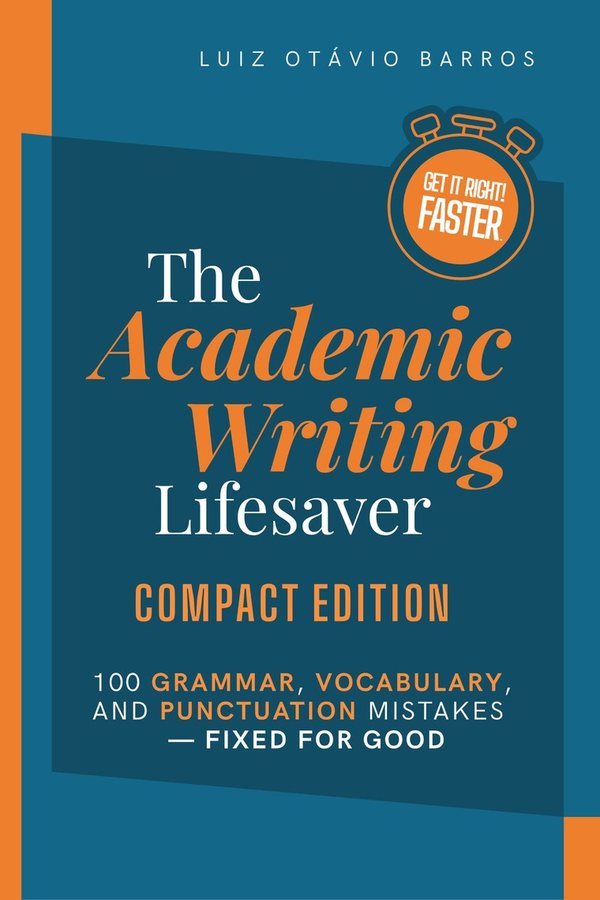
Go deeper: Lessons 10A–10F
Cause and effect is covered in full in Lessons 10A–10F of The Academic Writing Lifesaver — Compact Edition, with more examples, learning hacks, and self-check exercises.