
Academic writing · Word choice
Compare and Contrast Words: Exercises for Academic Writing
Comparing theories, methods, and findings is at the heart of academic writing, but the words for it are easy to mix up. Practice choosing the right one for each comparison. Every answer comes with an explanation.
- As opposed to: = rather than. It links parallel structures: two nouns (rules, as opposed to guidelines), two adjectives, or two -ing forms (testing, as opposed to guessing).
- In contrast or on the contrary: In contrast shows how two things differ. On the contrary emphasizes that the opposite of a stated or suggested idea is true. It often follows a negative statement.
- Although or whereas: Although usually introduces a concession (= despite the fact that). Whereas usually contrasts two facts or situations. For concessions, although or while is generally the clearer choice.
- While: can do both jobs. It compares (= whereas) or concedes (= although).
- Different from: a safe choice in academic writing. Different than is also accepted in American English, especially before a clause. Also: differ from, differ in, a difference in / between, differently from.
- Worse or worst: Worse is the comparative: worse than before. Worst is the superlative: the worst result of all.
These points are covered in full in Lessons 9A–9F of The Academic Writing Lifesaver — Compact Edition.
Choose the correct word or phrase.
Choose the word or phrase that makes each comparison correct.
1Critical reading means questioning sources, as opposed to ? them at face value.
Answer: accepting. As opposed to links two parallel -ing verbs: questioning sources, as opposed to accepting them.
The other options
acceptQuestioning is an -ing form, so use -ing here too to keep the two verbs parallel: as opposed to accepting.
acceptedAfter as opposed to, use an -ing verb to match questioning: as opposed to accepting.
2The objection is ethical, ? technical.
Answer: as opposed to. As opposed to can contrast two adjectives: ethical, as opposed to technical.
The other options
in contrastIn contrast cannot directly join these two adjectives. Use as opposed to.
whereasHere, whereas would need a clause: whereas the earlier objection was technical.
3Adult patients recovered within a week; ?, children needed almost a month.
Answer: in contrast. In contrast shows how two things differ: adults recovered quickly; children took much longer.
The other options
on the contraryTry the opposite is true: it doesn’t fit. The first idea is true; the second just differs from it.
whereasWhereas isn’t used after a semicolon with a comma after it. Use Adult patients recovered within a week, whereas children …
4The new rules did not reduce paperwork. ?, they doubled it.
Answer: On the contrary. The opposite is true: the rules didn’t reduce paperwork; they increased it.
The other option
In contrastHere the writer rejects the idea that the rules reduced paperwork and emphasizes the opposite: they increased it. Use on the contrary.
5? the left hemisphere controls the right side of the body, the right hemisphere controls the left.
Answer: Whereas. Whereas simply compares two facts: left controls right; right controls left.
The other options
DespiteDespite can’t be followed by a clause, and nothing here is unexpected.
HoweverHowever cannot join these clauses with only a comma. Use whereas to introduce the comparison.
6? the drug was approved in 2015, few doctors prescribe it.
Answer: Although. The second fact is unexpected given the first, so although (= despite the fact that) fits.
The other option
DespiteDespite cannot directly introduce the drug was approved in 2015. Use although, or write despite the fact that the drug was approved in 2015.
7? it is true that the method takes time, its results are highly accurate.
Answer: While. While it is true that … is a common academic way to concede a point before making your own.
The other options
DespiteDespite cannot directly introduce it is true that …. Use while to introduce the concession.
On the contraryThe second clause acknowledges a benefit despite a drawback; it does not assert the opposite of an idea. Use while.
8The response from farmers was quite different ? what the government had hoped for.
Answer: from. Different from + a wh- word: different from what the government had hoped for.
The other options
ofDifferent isn’t followed by of. Use different from.
withDifferent isn’t followed by with. Use different from.
9The two languages differ markedly ? their word order.
Answer: in. Differ markedly means differ noticeably. Use in to identify the feature: differ markedly in their word order.
The other options
fromDiffer from compares one thing with another: English differs from Japanese. It doesn’t name the point of difference.
betweenBetween goes with difference, not differ: the difference between the two languages.
10Three teaching methods were compared, and the lecture-only method produced the ? test scores.
Answer: worst. The worst picks out the poorest test scores of the three. Test: the best test scores also fits.
The other option
worseThree methods are compared, so use the superlative: the worst test scores. Worse compares two things.
Wrong word or correct?
Decide whether each comparison word is used correctly. Six have a wrong word and four are correct.
1The program rewards teachers for guiding discussion, as opposed to simply delivering lectures.
As opposed to contrasts two parallel -ing verbs: guiding discussion / delivering lectures.
2Urban schools received extra funding. On the contrary, rural schools received none.
The writer contrasts the funding received by urban and rural schools. Use In contrast, rural schools received none.
3There are striking differences from the two education systems.
With two things being compared, difference takes between: striking differences between the two education systems.
4The older cohort relied mainly on email, while the younger cohort preferred messaging apps.
Here while compares two groups, just like whereas. Note the comma before it in the middle of the sentence.
5Air quality in the capital was worst in 2023 than in any previous year.
Worst is never followed by than. Use the comparative: Air quality … was worse in 2023 than in any previous year.
6The policy is aimed at preventing crime, as opposed to punish offenders.
After as opposed to, use an -ing verb to match preventing: as opposed to punishing offenders.
7While the exhibition attracted large crowds, it received poor reviews from critics.
Here while means although: the poor reviews are unexpected, given the large crowds.
8The author does not reject the theory. On the contrary, she defends it throughout the book.
The second sentence says the opposite of reject is true: she defends the theory. So on the contrary fits.
9Small firms respond to tax changes differently of large corporations.
Use differently from when comparing how two groups do something: Small firms respond to tax changes differently from large corporations.
10This was the worse winter the region had experienced in fifty years.
This winter is compared with fifty others, so use the superlative: the worst winter. Test: the best winter also fits.
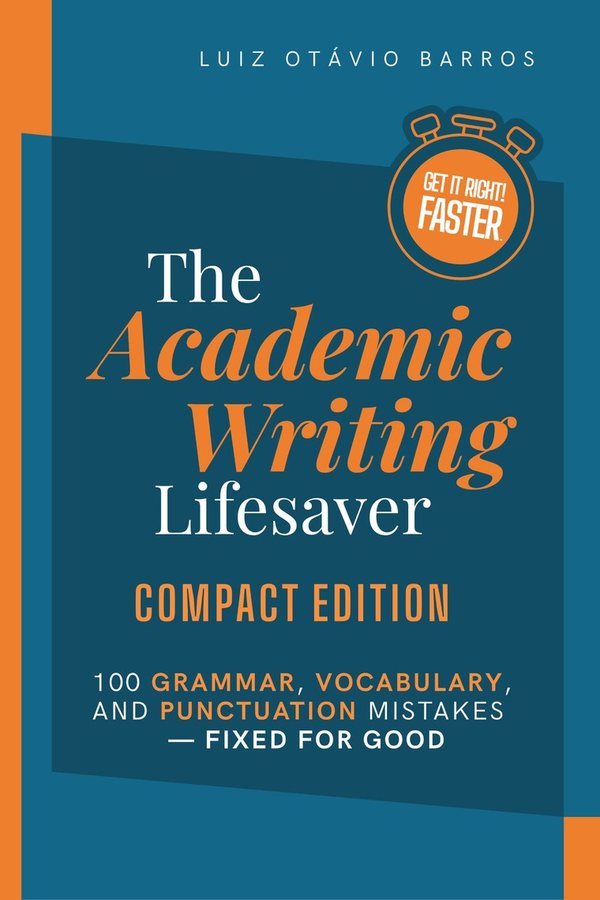
Go deeper: Lessons 9A–9F
Comparing and contrasting is covered in full in Lessons 9A–9F of The Academic Writing Lifesaver — Compact Edition, with more examples, learning hacks, and self-check exercises.