
Academic writing · Grammar
That vs. Which Exercises for Academic Writing
Pronouns like this, that, and which keep your writing connected, but only if the reader knows what they refer to. Practice the words that point back to earlier ideas and the punctuation that goes with them. Every answer comes with an explanation.
- Former or latter: The former = the first of two; the latter = the last. The verb agrees with the noun it refers to.
- Respectively: Matches two lists in the same order, and the numbers of items must match: A and B scored 60 and 70, respectively. Respective = each one’s own.
- That or which (1): For essential information about things, that is the usual American-English choice, without commas; which is also possible. For extra information, use which with commas.
- That or which (2): The choice can change the meaning: the samples that were damaged identifies the damaged samples; the samples, which were damaged, says that all the samples being discussed were damaged.
- That, who, or which: For people, use who, never which. Never put a comma before that.
- Some of which or whom: Comma + some of which for things, some of whom for people. Some of them + a verb starts a new sentence, so it can’t follow a comma.
- Whose: Shows possession, for people and things: a writer whose work I admire.
These points are covered in full in Lessons 7A–7G of The Academic Writing Lifesaver — Compact Edition.
Choose the correct word or phrase.
Choose the option that best completes each sentence.
1Students could take the exam online or on paper. Most chose the ? because they could type faster than they could write.
Answer: former. The former = the first option mentioned (online), which is where students type. Think Former = First.
The other option
latterThe latter is the last of the two options mentioned: on paper. Typing fits the first option.
2The team tested a genetic explanation and an environmental one; the latter ? strongly supported by the data.
Answer: was. The latter refers to the environmental explanation, so use singular was.
The other option
wereThe latter refers to one explanation here, so were doesn’t agree.
3In the survey, men and women reported an average of 6.8 and 7.2 hours of sleep, ?.
Answer: respectively. Respectively = in the same order: men 6.8 hours, women 7.2 hours.
The other options
respectiveRespective is an adjective and needs a noun after it (their respective jobs).
respectfullyRespectfully means politely, with respect.
4The three finalists will present their ? designs to the jury next week.
Answer: respective. Respective = each one’s own. Each finalist will present their own design.
The other option
respectivelyRespectively is an adverb that matches two lists in order. Before a noun, you need the adjective respective.
5Hospitals? invest in staff training tend to have lower error rates.
Answer: …Hospitals that invest… The clause identifies the hospitals being discussed: those that invest in training. That with no commas works here.
The other option
…Hospitals, which invest…The opening comma makes this extra information, so it also needs a comma after training. Even then, the sentence would say that hospitals in general invest in training.
6The Amazon rainforest, ? extends across much of northern South America, helps regulate the global climate.
Answer: which. There’s only one Amazon rainforest, so the clause adds extra information. Use a comma + which.
The other option
thatNever use that after a comma. The clause adds extra information, so it needs which.
7The study’s lead statistician, ? joined the project in its second year, redesigned the sampling plan.
Answer: who. The statistician is a person, and the clause adds extra information, so use a comma + who.
The other options
whichWhich refers to things, never to people.
thatNever use that after a comma. For extra information about a person, use who.
8The library holds over 2,000 manuscripts, ? date from the twelfth century.
Answer: some of which. Comma + some of which adds extra information about things.
The other options
some of whomWhom refers to people. Manuscripts are things.
some of themSome of them date from the twelfth century is a complete clause, so a comma alone can’t join it to the first. Use a semicolon or period before some of them.
9More than 300 firefighters, ? were volunteers, fought the blaze for three days.
Answer: most of whom. Most of whom adds extra information about people. Here it sits between two commas.
The other options
most of whichWhich refers to things. Firefighters are people.
most of themMost of them were volunteers is a complete clause, so it can’t sit between commas inside another sentence. Use whom.
10Families ? children attend the after-school program pay reduced fees.
Answer: whose. The children belong to the families (the families’ children), so use whose.
The other options
whichWhich doesn’t show possession, and it doesn’t refer to people.
whoWho would need a verb next: families who have children …
Mistake or correct?
Decide whether each sentence is correct. Six have a mistake and four are correct.
1The first speaker was a retired pilot, that flew cargo planes for thirty years.
The clause tells us what kind of pilot the speaker was, so it’s essential information: no comma. … a retired pilot who flew … That is also possible here, but who is the better choice for people in academic writing.
2Eastfield, Northgate, and Westbrook schools received 120, 95, and 80 applications, respectively.
The figures follow the order of the schools: Eastfield received 120 applications, Northgate 95, and Westbrook 80.
3The museum owns about 900 maps, many of them have never been displayed.
Many of them have never been displayed is a complete clause, so this is a comma splice. Write … 900 maps, many of which have never been displayed or … 900 maps; many of them have never been displayed.
4The seats, which face the stage, cost $60, and the rest cost $35.
With commas, which face the stage means all the seats face the stage, so there can’t be “the rest.” Only some do, so use that and no commas: The seats that face the stage cost $60 …
5Words whose meanings have changed over time can confuse modern readers.
Whose can refer to things as well as people. Here, the meanings belong to the words.
6The author published a novel and a memoir, the latter became a bestseller.
The latter became a bestseller is a complete sentence, so a comma alone can’t join it to the first. Use a semicolon or a period: … a memoir; the latter became …
7The questionnaire that we used had been tested in an earlier study.
That we used tells us which questionnaire, so it’s essential information: that and no commas.
8The trial enrolled patients which symptoms had lasted for more than six months.
The symptoms belong to the patients (the patients’ symptoms), so you need whose: … patients whose symptoms had lasted …
9Nurses and doctors reported working 42, 50, and 55 hours a week, respectively.
There are two groups but three figures. Match one figure to each group—for example: Nurses and doctors reported working 42 and 50 hours a week, respectively.
10Children who read for pleasure usually build larger vocabularies.
Who read for pleasure tells us which children, so there are no commas. For people, who is the best choice in academic writing.
Go deeper: Lessons 7A–7G
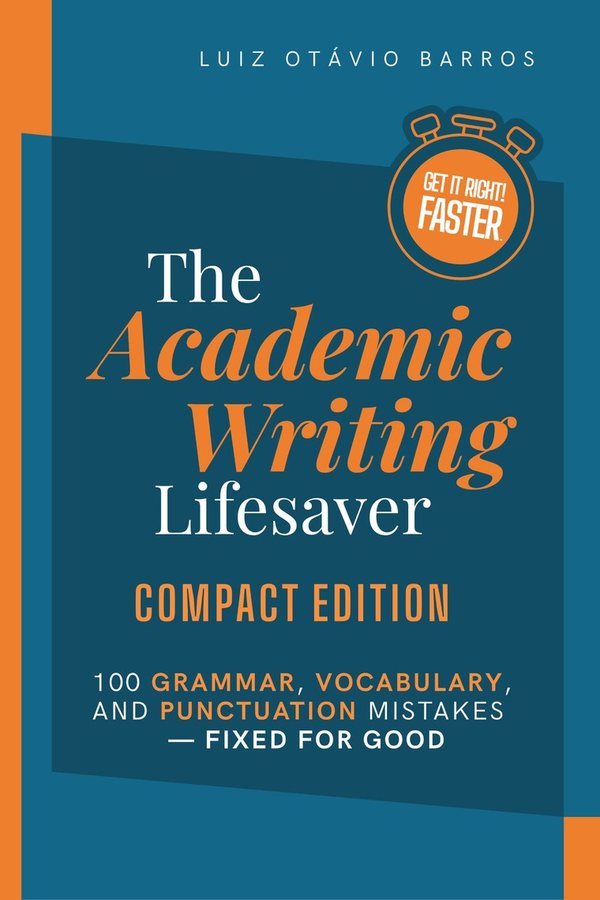
These points are covered in full in Lessons 7A–7G of The Academic Writing Lifesaver — Compact Edition, with more examples, learning hacks, and self-check exercises.